Monday, December 12, 2011

Kepler: A Love Story

Last week NASA announced the discovery of an Earth-like planet in a 290-day orbit, placing it firmly in the habitable zone of its Sun. I was attending the Kepler Science Conference where the announcement was made, and I was part of the team that determined the absolute size of the planet in the discovery paper using a technique known as asteroseismology to characterize the host star. Ironically, NASA recently rejected my proposal to perform this type of analysis in the future -- but they are willing to let me do it for free.

Last February, I submitted a proposal to do "Precision Asteroseismology of Kepler Exoplanet Host Stars". I did not have access to the Kepler data on these targets, but the methods that I had developed for asteroseismic analysis were yielding very exciting results for other solar-type stars in the Kepler field, including precise values of the stellar radius, mass, and age. Becoming a Kepler Participating Scientist would give me access to the exoplanet data and allow the mission to benefit from these developments. In early May, I was contacted by members of the Kepler science team and asked to sign a non-disclosure agreement to become part of a small team doing asteroseismology of exoplanet host stars. Previously, all such analysis was done by just three people on the science team and they were quickly finding that they could not keep up with the demand. The expanded team included about a dozen people recruited from the Kepler Asteroseismic Science Consortium -- a large collaboration of primarily European scientists who were providing their expertise in exchange for early access to the data (without funding from NASA). Before signing the agreement, I contacted the Participating Scientist program officer to express my concern that doing so may influence the selection process. He assured me that there was a "firewall" between the science team and the panel review. I signed the agreement and became part of the new team.

As promised, the science team did not influence the ranking of proposals by a panel of experts, and my proposal was ranked high enough to be funded by the program. However, the selection of proposals for funding was based not only on the panel rankings but also on a "programmatic evaluation" by the program officer in consultation with several members of the Kepler team, including the Science PI, Project Scientist, Deputy Project Scientist, Science Team Lead, and Deputy Science Team Lead. This evaluation occurred several weeks after I had signed the agreement to become part of the team that would do for free the analysis that I was asking NASA to support in my proposal. In other words, the same people who asked me to become part of the team doing asteroseismology of exoplanet host stars in early May told the program officer several weeks later that "the need for a Participating Scientist in the area of asteroseismology was not as pressing as it was in other areas". The experts determined that the science was worthy of funding, but the Kepler team passed over my proposal to fund several others that were judged inferior based on the science. They were happy to have me do the work for free, they just didn't want to pay for it.

This was not the first time that the Kepler team had rejected my asteroseismology proposal due to a "programmatic" evaluation that trumped the rankings based on science. In 2007, I submitted a Participating Scientist proposal to develop the method that I am now using to do asteroseismology of the stars observed by Kepler. That proposal was also ranked in the top tier, high enough to be funded by the program but again passed over to fund lower-ranked proposals. As a direct consequence of that decision, in early 2008 I started the Pale Blue Dot project -- an attempt to raise private funding by putting the Kepler target stars up for adoption for $10 each through a non-profit website. This program has provided enough funding to help sponsor two international workshops of the Kepler Asteroseismic Science Consortium, waiving the registration fee for all of the students and early career scientists. Even so, the available funds are meager compared to the grant support that I was requesting from NASA. To make things even more difficult, due to federal budget cuts my current position as a research scientist will be eliminated next year -- so I am faced with a decision to either contribute the analysis for free, or be left out of the team doing this exciting work.

It is understandable that NASA wants to apply its scarce resources to areas where it will have the most impact. But with a large team in Europe doing asteroseismology for free, the few U.S. scientists who are working in this field are facing an uphill battle for funding. The science will certainly push forward, but without support the U.S. asteroseismology community will ultimately disappear.


Monday, November 14, 2011

Slow Motion Disaster

Last week an asteroid known as 2005 YU55 zoomed past the Earth at a distance closer than the Moon. Imagine if astronomers knew about a similar asteroid that would actually impact the Earth sometime in the next few decades, but they decided not to discuss it with the people of the world. The public would understandably be outraged at such a cover-up -- they would demand to know the details of when and where the asteroid would strike our planet, and the likely consequences for the survival of the human race. Although this example is fictional, it is precisely the situation faced by climate scientists who are currently not talking about the unavoidable consequences of climate change during the next 50 years.

The release of too much heat-trapping pollution into the Earth's atmosphere is like an ecological deficit that we pass to future generations, and the gradual accumulation of this pollution is our climate debt. The choices of our parents and grandparents resulted in the release of so much carbon-dioxide that it exceeded the capacity of the Earth's natural systems -- primarily the oceans and forests -- to absorb it. The surplus pollution from each year remains in the atmosphere, and commits us to some amount of climate change for as long as it takes the planet to work through the accumulated excess. Even if we eliminated all human-induced sources of this pollution right now -- like coal-burning power plants and gasoline-powered automobiles -- the globe would continue to warm significantly for at least the next 50 years. This fact is not a secret, but the implications are so devastating that climate scientists generally prefer to discuss what we can do to "avoid the worst consequences of climate change" so that people will be less likely to feel overwhelmed.

Since the industrial revolution, the average temperature on the surface of the Earth has increased by about 1 degree centigrade. Knowing how much extra heat-trapping pollution is already in the atmosphere, and looking at the geological record of how temperature and carbon-dioxide empirically change together, scientists know that we are already committed to additional warming of 1-2 degrees centigrade over the next 50 years. Our decisions now about how to respond to the threat of climate change will only affect how much warmer the planet will get, and how long it will take to return to its normal temperature during the lives of our children and grandchildren. There is a significant moral difference between our actions and those of previous generations, because we now know with certainty what our choices are doing to the atmosphere and we are collectively making a conscious decision that will determine the type of world we will leave for our progeny. Considering the extreme weather events that have already resulted from 1 degree of warming -- hurricanes, tornadoes, drought and flooding -- the prospects for the next 50 years already look bleak, even if we manage to stop digging the hole deeper within our lifetimes.

Although it can be depressing to focus on the unavoidable consequences of climate change, it is important to remember that we still have the power to save the future. Our generation will certainly need to adapt to a warmer world, but we can also take steps in the short term to minimize the impact of the current climate debt. There are a variety of options for countering the warming effect of the excess carbon-dioxide in the atmosphere, from simple actions like planting more trees to more aggressive responses like artificially enhancing the capacity of the ocean to absorb heat-trapping gases, or injecting sulfates into the upper atmosphere to reduce the amount of energy the Earth's surface receives from the Sun. These are just short term strategies -- even if we can temporarily regulate the temperature of the planet, the excess carbon-dioxide will still acidify the oceans and disrupt fragile ecosystems -- but they could potentially help us make the transition to a clean-energy future at a lower financial and ecological cost.

Scientists should level with the public about the climate change we will experience over the next 50 years. Just like an asteroid on an impact trajectory, the longer we wait to respond to the problem the harder it becomes to avoid a disaster. Unlike an asteroid, part of the climate disaster is unavoidable. With a better understanding of the impacts we are already facing, the citizens of the world can demand a response.

Saturday, October 15, 2011

Faster than Light?

Last month a team of physicists from the European Center for Nuclear Research (CERN) in Switzerland announced that they had sent a burst of particles across 450 miles to collaborators in Italy -- and they appeared to complete the journey faster than light. According to Einstein's theory of relativity, light establishes the ultimate speed limit for the Universe, and nothing can move faster. My thesis adviser Ed Nather at the University of Texas had a simple rule of thumb for such situations: "Never bet against Einstein".

The experiment itself was conceptually simple. The scientists used the huge accelerator at CERN to produce a bunch of sub-atomic particles called neutrinos, and then beamed them toward a laboratory in Italy where they could be detected. Neutrinos do not interact very much with other matter, so most of them would be expected to complete the journey -- and with something like a large vat of cleaning fluid surrounded by light-sensitive detectors, a small fraction of them could be measured at the finish line. If the distance between the two locations could be determined accurately, the time required to make the trip would reveal the speed of the neutrinos. After repeating the experiment many times, the physicists came to a startling conclusion: the particles took 60 billionths of a second (60 ns) less than it would take light to travel between the laboratories. Light moves about 1 foot (30 cm) in a billionth of a second, so a 60 ns discrepancy corresponds to an error of about 60 feet (18 meters) on the distance between the two locations. Using GPS satellites, they actually knew the distance to within about 8 inches (20 cm), and they also had very precise measurements of the time. So they announced the result and asked for other explanations.

Astronomers were quick to point out a serious problem with the result. If neutrinos really moved slightly faster than light, then those produced in the most recent nearby explosion of a massive star should have been detected about 4 years before we saw the star grow brighter in 1987. In fact, the neutrinos from that "supernova" explosion were detected just a few hours before the light, which is consistent with what we understand about how stars end their lives. So something had to be wrong with the experiment -- and the culprit was probably identified this week by a Dutch mathematician. It turns out that the GPS satellites are moving fast enough in their orbits around the Earth that corrections are needed to the times that they record for the production of the neutrinos in Switzerland, and their subsequent detection in Italy. Ironically, these corrections come from Einstein's theory of relativity and amount to 32 ns on each event, for a total difference of 64 ns -- within the uncertainty of the 60 ns discrepancy observed by the CERN team.

Einstein has stood the test of time. In his one mistake of failing to predict the expansion of the Universe discovered by Vesto Slipher and Edwin Hubble (which he described as the "greatest blunder" of his career), he ended up predicting the "dark energy" that was discovered more than half a century later. So the next time you hear a claim about faster-than-light travel, just remember Ed's rule of thumb.

Thursday, September 8, 2011

Changing Priorities

If you are an astronomer who doesn't work at a university, the chances are good that you work at one of the many federally funded research facilities or observatories (e.g. STScI, NOAO). There are several types of positions at such institutions, including some supported by grants (soft money) and others supported by base funding from the sponsor (hard money). Some hard money positions can even be on a tenure track, with the usual disclaimer about being "contingent on the availability of funding". These jobs generally involve some combination of research and service in support of the mission of the organization. Such positions are ideal for scientists who want to spend most of their time doing research rather than teaching -- the only catch is that your research must be relevant to the strategic goals of the institution.

My first experience working in a federally funded research laboratory came during the summer before I finished my PhD. One of the external members of my thesis committee was a hard money scientist at the High Altitude Observatory (HAO) in Boulder, Colorado -- part of the National Center for Atmospheric Research (NCAR), which is sponsored directly by the National Science Foundation. Growing up professionally in an academic environment, I was surrounded by scientists who decided that being a university professor was the best career choice. This was my first exposure to an institution filled with people who had made a different evaluation. It was a powerful experience that really resonated with my vision of the ideal job, and by the end of the summer I was convinced that a hard money career path was right for me.

After finishing my thesis, I spent several years as a postdoc before landing an NSF fellowship that brought me back to HAO. About a year later, I was hired as a tenure track hard money scientist. As the name suggests, the primary research focus at NCAR is the Earth's atmosphere -- but because the Sun is responsible for the energy input at the top of the atmosphere and for the particle flux underlying disruptive "space weather" events, HAO is the NCAR laboratory devoted to solar physics. My job was to maintain a connection between this group of several dozen solar physicists and the wider astrophysics community -- using stars to provide a broader context for our understanding of the Sun, and ensuring that stellar research could benefit from the laboratory's detailed knowledge of our local star.

Life as a hard money scientist was good. In addition to having access to a 12-month salary without the requirement of writing grant proposals, each scientist was allocated a modest annual travel stipend while internal funds also paid for journal page charges and even helped bring in scientific visitors. In return, we worked on large-scale and long-term projects that were not amenable to funding through standard three-year grants, often with a focus on serving the scientific community with new modeling capabilities or public data. The primary disadvantage of being an astronomer in a solar physics laboratory was the difficulty of finding students and postdocs. Unlike a university environment where students are the lifeblood, only a few students could be supported by internal fellowships at HAO. Postdocs were also hard to find, since most of the fellowship applicants were interested in solar physics, not astronomy. Consequently, like many hard money scientists I still wrote grant proposals to help recruit students and postdocs, and to provide part of my salary.

Perhaps the greatest source of anxiety for a hard money scientist is the annual drama of the federal budget cycle. Flat budgets at the federal level generally translate into a flat budget for the NSF and all of its programs. As everyone knows, a flat budget in the face of rising operating costs really means a cut. When the budgets do get increased for inflation, salary levels within each laboratory are supposed to be adjusted according to merit -- but in reality the extra funds either disappear entirely to offset a previous budget shortfall, or they are distributed evenly among the staff to compensate for the years without a cost of living adjustment. The leadership in Washington certainly recognizes the importance of scientific research as an engine of economic growth and innovation (read the America COMPETES Act), but these lofty pronouncements rarely seem to be reflected in national budget priorities.

Nobody needs to be reminded of the chaos surrounding the most recent federal budget cycles. A series of short-term "continuing resolutions" to fund the government at 2010 levels ultimately led to a budget for 2011 that finally passed more than halfway through the fiscal year. By this time the NSF and its programs were already preparing budget scenarios for 2012, and the partisan rancor in Washington made it clear that difficult decisions were unavoidable. It was in this atmosphere that HAO concluded it could no longer support stellar research, and I was given 12 months notice that my position would be eliminated. Despite outstanding annual performance reviews and wide ranging contributions to programs across the organization, changing priorities motivated by federal budget cuts ended my career as a hard money scientist.

Fortunately there are other ways to survive as a research scientist. After my final year on hard money, I hope to continue working at NCAR for another year or so on soft money. In the longer term, I will probably need to seek an environment with lower overhead expenses to continue funding myself on grants. As a graduate student I formed a non-profit organization dedicated to scientific research and public education, thinking that it could always be my backup plan in case a hard money position didn't materialize. This unexpected career transition may be just the impetus I needed to build on this foundation, and hopefully make a soft landing on soft money. Wish me luck.

Tuesday, August 16, 2011

Seeds of Life from Space

Last week, just in time for the annual Perseid meteor shower, NASA scientists announced new evidence that the building blocks of life may have been manufactured in outer space and delivered to our planet on a meteorite. The implications of the discovery are profound: if the chemicals that make up DNA can be formed anywhere in the cosmos, the universe is most likely teeming with life.

Every year in early August, the Earth passes through a cloud of debris in space left behind by comet 109P/Swift-Tuttle, which last came through the solar system in 1992. Some of the ice and dust shed by the comet on its 135 year journey around the Sun is pulled in each year by the gravity of the Earth and burns up in the atmosphere, creating a "shooting star" for anyone who happens to be watching. At the peak of the shower, observers far from the city lights can see about 100 meteors every hour. Meteorites -- chunks of space rock that are large enough to make it all the way to the ground -- are much less common than meteors. Even when they don't disintegrate entirely from the friction of entering the atmosphere at 100,000 miles per hour, most of them fall in the ocean or are quickly eroded on land. The exception is Antarctica, where meteorites are preserved in the ice -- and this is where the space rocks with DNA were found.

Over the past 50 years, evidence of life has turned up in many space rocks. It has been clear since the 1960's that amino acids (chemicals that build proteins) can be formed in space, and a recent examination of a dozen Antarctic meteorites led NASA scientists to suggest that adenine and guanine -- two of the four "nucleobases" that link up to form DNA -- can also come from the sky. We know that the meteorites came from space, but the difficulty has always been establishing the source of the organic molecules: they are much more likely to come from contamination after they reach the surface of the Earth. In this case, the scientists did not find any other molecules that should have accompanied the nucleobases if they had come from contamination. Instead they found additional non-biological molecules that were not present in samples of the soil and ice where the meteorites were found. The properties of the samples, along with simple experiments to show how nucleobases can be manufactured naturally in space, support the idea that these space rocks contain some of the building blocks of life.

Over the past two decades we have learned that planets are much more common than we ever imagined, and this latest research suggests that a lifeless planet can be seeded with organic molecules from outer space. If rocks from the sky contain some of the ingredients of DNA, it is not a stretch to believe that life must be common in the universe.

Monday, July 25, 2011

Rethinking Space Exploration

When the shuttle Atlantis touched down in Florida last week, it marked the end of an era for space exploration. Thousands of NASA engineers found themselves unemployed after three decades of a largely successful program. Astronauts scheduled to visit the International Space Station will now be forced to hitch a ride with the Russians. The human space flight program in the United States will soon be handed over to private companies, and anyone willing to pay a few hundred thousand dollars can buy their 15 minutes of space. Is this the beginning of a new era of discovery, or the end of exploration as we know it?

In a 1962 address at Rice University, President John F. Kennedy said "we choose to go to the moon in this decade and do the other things, not because they are easy, but because they are hard". Less than 7 years later, the Apollo 11 mission delivered astronauts to the moon and returned them safely to the Earth. There were certainly some scientific contributions of the Apollo program -- astronauts returned samples of the lunar surface, and they set up a reflector that allowed astronomers to measure the distance to the moon with unprecedented accuracy -- but it was driven more by the arms race with the Soviet Union than by science. After all, if the United States could launch a rocket and deliver astronauts to a target nearly 240,000 miles away, that same technology could also be used to deliver a nuclear warhead to Red Square in Moscow. If we accomplished some science along the way -- well, great.

With the cold war now a fading memory, our current leaders have struggled to identify a generational goal for NASA, let alone one that can be accomplished in less than a decade. From the least ambitious circles there have been calls to return to the moon, as if the United States can somehow save itself from imperial decline by reliving the glory days of the past. More ambitious, though arguably suicidal, are the calls to send astronauts to the planet Mars -- apparently for no other reason than to continue providing large subsidies to aerospace contractors. Once outside the protection of the Earth's magnetic field, it would be difficult to avoid a fatal dose of radiation from solar flares during the 450-day round trip. With the Sun gradually becoming more active in its 11-year cycle, such a mission cannot be scheduled for the coming decade. So the two sides struck a compromise: let's send astronauts to an asteroid.

Right on cue, last week NASA's Dawn probe beamed back images of Vesta, one of the largest asteroids in the solar system. No, this is not one of the asteroids on a collision course with our planet, and there are no plans to revive the shuttle program and send retired astronauts on a mission to blow it up. Vesta is much smaller than the moon, but much closer than Mars, so by sending people there we can relive our glory days and continue to provide large subsidies to aerospace contractors, probably without killing any astronauts and almost certainly without making any accidental contributions to science. All of this at a time when funding for the National Science Foundation has been declining in real terms for years, NASA's next generation space telescope is on the chopping block, and the nation is about to go bankrupt.

At the end of the shuttle program, the future of space exploration is up in the air. There are more harmful ways to spend money than using it to send people into space, but there are also more productive ways to spend that money. If science is the purpose, there is much more we can do without ever leaving the surface of our planet.

Thursday, June 30, 2011

Understanding the Sun

Earlier this month, reports emerged from the Solar Physics Division meeting of the American Astronomical Society that the Sun may be headed into magnetic hibernation, pushing the Earth into a "Little Ice Age" and resulting in a "sharp decrease in global warming". The historical record of sunspots can only take us back a few hundred years. To understand the Sun on longer time scales, it helps to study other stars that are older and younger. Without this broader context, we have no way of knowing whether the Sun is typical or peculiar.

Consider the Gallup Organization, which regularly conducts telephone polling around the world to track public opinion. Each poll typically includes interviews with more than 1000 people, representing the full range of demographics within a given region. Imagine how different the Gallup poll results might be if instead of contacting a broad cross-section of society, they only interviewed one person in the town of Gallup, New Mexico. Depending on the topic of the poll and the person they happened to choose, we might get a very biased view of "public opinion" from this single interview. That's the whole point of sampling opinion more broadly: the responses from the population provide context for those of any individual. When scientists study the Sun, observations of other stars provide this context. So what can other stars tell us about the solar magnetic cycle and the possibility of the Earth entering a "Little Ice Age"?

Observations of sunspots show that the Sun goes through a magnetically active phase every 11 years, causing it to brighten by about 0.1% and bombard the Earth's upper atmosphere with high-energy radiation and charged particles. For a 70-year stretch beginning around 1645, this magnetic cycle disappeared from the surface of the Sun. Historians note that the absence of sunspots during this time coincided with a period of unusually cold winters in Europe -- a time known as the "Little Ice Age". There were several volcanic eruptions during the same period that thrust large quantities of sulfates into the Earth's upper atmosphere, which is known to have a cooling effect on climate -- so it is unclear whether, or to what extent, this so-called "Maunder minimum" in the Sun actually influenced global temperatures.

Studies of large populations of stars like the Sun reveal two particularly interesting facts: (1) Stars typically spend about 15% of their lifetimes in magnetic hibernation like the "Maunder minimum", and (2) There is a clear set of relationships between a star's rotation period and the length of its magnetic cycle -- that is, for all stars except the Sun. In other words, studies of other stars tell us that the Sun is in a peculiar phase of its evolution. If we want to understand the general problem of how magnetic cycles are created and sustained in stars -- including why they occasionally go into hibernation -- a good place to start is with stars that are more typical. Otherwise, we risk fine-tuning our understanding to explain a special case (our Sun) that turns out to be peculiar.

The broader context provided by other stars suggests that the Sun may very well be entering magnetic hibernation -- with the last one starting more than 350 years ago, we are nearly due for another. But the logical jump from expecting another "Maunder minimum" to creating a new "Little Ice Age" is much more speculative. In fact, the latest research suggests that "the change in climate radiative forcing since the Maunder minimum is about one tenth of the change caused by man-made trace greenhouse gases". So whatever happens with the Sun in the coming decades, the planet is certainly going to get warmer.

Tuesday, May 31, 2011

Kepler's Multi-planet Bonanza

Last week at a meeting of the American Astronomical Society in Boston, scientists working with NASA's Kepler mission announced the confirmation of an additional planet in a previously identified planetary system. The abundance of systems showing multiple planets has been one of the early surprises to emerge from the stellar census being conducted by the space telescope.

"We didn't anticipate that we would find so many multiple-transit systems," said astronomer David Latham from the Harvard-Smithsonian Center for Astrophysics. "We thought we might see two or three. Instead, we found more than 100." In a survey of 156,000 stars during just the first four months of the mission, the Kepler team identified more than 700 stars that appeared to host planets. This relatively small fraction (0.5%) was expected, since the technique that is being used to discover the planets is only sensitive to those that pass directly in front of their host star. The orbits of the planetary systems are randomly oriented in the sky, so simple geometry can be used to convert the fraction of stars with observed planets into the fraction of stars that actually host planets. In addition, since the experiment must observe several consecutive orbits to trigger a detection, only planets with the shortest orbital periods have already been identified -- so the number of planets is expected to grow as the mission continues. The big surprise was the relatively large fraction of these stars that appear to have more than one planet (~15%). The planetary orbits within our own solar system are in roughly the same plane, but the slight misalignment would prevent a distant observer from seeing many planets with the technique used by the Kepler mission.

It is exciting enough to learn that multi-planet systems like ours may be more common than we anticipated -- but these systems can also help us measure the masses of the planets, and teach us about how planetary systems form and evolve. In multi-planet systems, not only do the individual planets gravitationally tug on their host star, they also pull on each other and change their orbits over time. Larger planets pull more strongly on other bodies in the system, so the changes in the orbits can be used to measure the masses of the individual planets. The masses are usually determined by measuring the tiny reflex motion of the host star, but many of the planets being discovered by Kepler are far too small -- approaching the size of the Earth -- to make such measurements with currently available technology. So the ability to measure interactions between planets in these distant solar systems represents a huge opportunity to characterize our stellar neighbors. Looking at the multi-planet systems discovered by Kepler so far, one striking fact is that none of them seem to contain planets much larger than Neptune. The gravity of larger planets like Jupiter tend to scatter smaller planets into tilted orbits -- or even eject the planets from the system entirely. So the absence of large planets in the systems that have so far been discovered appears to make sense.

If there is one recurring lesson in the history of astronomy, it is that we have always been conservative about how common other solar systems like ours might be. Kepler has already taught us that tiny planets like ours are even more plentiful around other stars than the big planets that have been discovered over the past two decades. In the coming years, perhaps we will also find that habitable planets -- those that may support life -- are also far more abundant than we ever imagined.

Thursday, April 28, 2011

Space Shuttle Triple Finale

NASA's space shuttle program will soon be coming to an end, after 30 years and 135 missions to low-Earth orbit. The "final" launch tomorrow of the shuttle Endeavor will mark the second "final" launch this year (after the "final" launch of Discovery in February), with the third and final "final" launch of Atlantis planned for June. The retirement homes for the aging shuttles have already been selected, and flocks of tourists are gathering in Florida to witness the penultimate launch. Like the history of the shuttle program itself, the event is driven more by public relations than by science.

Consider the Hubble Space Telescope, one of the landmark public relations achievements of the space shuttle program. Released into low-Earth orbit from the cargo bay of the shuttle Discovery in April 1990, it was soon determined to have blurry vision which was subsequently corrected during the first servicing mission in December 1993. Various shuttles returned for additional servicing missions in February 1997, December 1999, March 2002, and finally in May 2009. It made great television. Heroic astronauts performed difficult tasks while floating 350 miles above our stunning blue planet. I don't mean to marginalize their achievements. It's just that low-Earth orbit is a lousy place to do science.

The only scientific advantage of low-Earth orbit is safety. A telescope that flies well within the protective magnetic field of the Earth is less vulnerable to charged particles from the Sun that could damage sensitive scientific instruments. The price for this safety is an endless 96-minute loop around the planet punctuated by enormous temperature variations between daylight and darkness, staggering levels of scattered light from the surface of the globe, and occasional journeys through the South Atlantic Anomaly -- a distortion in the Earth's magnetic field over South America that disrupts the normal functioning of crucial electronics. It is far better to put a telescope in an Earth-trailing orbit around the Sun like the Kepler mission, or near one of the Sun-Earth Lagrange points like the SoHO and Planck missions.

This isn't rocket science -- NASA knows that there are better places to do science than low-Earth orbit, which is why the James Webb Space Telescope will be parked at the outer Lagrange (L2) point. With the shuttles retiring and Hubble in the final phase of its mission, will the public relations gravy train come to a halt? Don't worry NASA, you still have the International Space Station.

Wednesday, March 30, 2011

The Inner Lives of Red Giants

Just as in Hollywood, the age of a star is not always obvious if you look only at the surface. During certain phases in a star's life, its size and brightness are remarkably constant, even while profound transformations are taking place deep inside. For most of their existence, stars shine from the energy released by nuclear reactions that convert hydrogen into helium, but eventually they begin to burn the helium in their cores to synthesize heavier elements, such as carbon and oxygen. In the latest issue of Nature, astronomer Tim Bedding and his collaborators demonstrate a new technique for distinguishing between these life stages, using continuous 'starquakes' to probe the deepest regions, where the changes are most dramatic.

The objects examined by Bedding and colleagues are known as red giants, the bloated fate of stars such as our Sun as they begin to exhaust their primary source of energy -- the hydrogen near the center that powers nuclear fusion. The resulting helium accumulates in the core, forcing hydrogen in a surrounding shell to burn more vigorously than before. About 5 billion years from now, these processes will gradually cause our own star to expand to more than 100 times its present size, becoming a red giant and destroying some of the inner planets in our Solar System. Stars that were born before the Sun, as well as heavier stars (which evolve more quickly), have already reached this phase of stellar evolution.

Like the Sun, the surface of a red giant seems to boil as convection brings heat up from the interior and radiates it into the coldness of outer space. These turbulent motions act like continuous starquakes, creating sound waves that travel down through the interior and back to the surface. Some of the sounds have just the right tone -- a million times lower than the audible range for humans -- to set up standing waves (known as solar-like oscillations) that cause the entire star to change its brightness regularly over hours and days, depending on its size. Inferring the properties of stars from these periodic brightness changes is a technique known as asteroseismology. The sound waves generated near the surface of a red giant can interact with buoyancy waves (rather like the waves in the ocean) that are trapped inside the helium core. Under the right conditions, the two types of waves can couple to each other, changing the regularity of the brightness changes at the surface. These 'mixed' oscillation modes are much more sensitive to structure in the core than are the uncoupled sound waves that sample only the stellar envelope.

The innovation that allowed Bedding and colleagues to distinguish between red giants at different life stages emerged from precise observations by the Kepler space telescope. Launched in March 2009, Kepler stares at a large patch of sky near the constellation Cygnus, monitoring the brightness of more than 156,000 stars with the goal of detecting habitable planets like Earth. The mission has been extremely successful at finding alien worlds, but it is also revolutionizing the study of stellar oscillations by providing many months of continuous data for thousands of stars. Earlier efforts to study red giants from ground-based telescopes were hampered by both the daily interruptions of sunlight and the limited duration of the monitoring.

As mentioned before, the trouble with red giants is that they all look nearly the same on the outside, regardless of their mass and age. Bedding and colleagues sought to determine these properties for the hundreds of red giants observed by the Kepler satellite, to measure precisely when stars of a given mass would shift from burning hydrogen in a shell to helium in the core. The regular pattern of standing waves is insufficient to pinpoint which energy source makes a particular red giant shine, but the mixed oscillation modes exhibit a unique pattern. By deciphering this pattern, Bedding and collaborators demonstrate how the two life stages of red giants can be separated using asteroseismology.

The life story of a red giant theoretically depends not only on its age but also on its mass, with stars smaller than about twice the mass of the Sun experiencing a sudden ignition known as a helium flash. The temperature required to fuse helium is significantly higher than that needed for hydrogen, and in low-mass stars the helium accumulates in the core at very high density until it reaches a critical size and ignites almost instantaneously. In more massive stars, the transition to helium core burning is gradual, so the stars exhibit a wider range of core sizes and never experience a helium flash. Bedding and colleagues show how these two populations can be distinguished observationally using their oscillation modes, providing new data to validate a previously untested prediction of stellar evolution theory.

This extraordinary peek into the inner lives of red giants was made possible by just the first year of observations from the Kepler mission, which is scheduled to operate for at least 3.5 years and might be extended by NASA for a further 2.5 years. The picture that emerges from asteroseismology will steadily improve as the observations continue, so we can expect even better results for the stars examined by Bedding and colleagues, as well as similar measurements for other red giants, in the near future.

Wednesday, February 9, 2011

James Hansen's Climate Future

In his global warming memoir "Storms of my Grandchildren", NASA scientist James Hansen describes his role over the last decade trying to inform policy decisions about climate change. Hansen has been working tirelessly on the science for more than 30 years, and I was most impressed with his reflections on the empirical certainty of climate change, his baseline for any serious attempt to address the problem, and his proposal to reconsider advanced nuclear power as part of the response.

One of the greatest criticisms of climate change theory is its reliance on computer models to make uncertain predictions about the future. According to Dr. Hansen, a better approach is to rely on the empirical evidence from the geological climate record. The layers of ice deposited in Antarctica over the past 425,000 years contain a detailed record of both the relative temperature (from the properties of the ice) and the concentration of heat-trapping gases in the atmosphere (from air bubbles trapped in the ice). This record includes information spanning the last four ice ages, which are caused by natural variations in the orbit and rotation axis of the Earth, and it demonstrates a precise relationship between the average temperature and the concentration of heat-trapping gases. The conclusion is unambiguous: we can expect the globe to warm by 3°C from a doubling of carbon-dioxide.

It may surprise readers of Hansen's book that he is opposed to cap-and-trade legislation as a policy response to climate change. Looking at the results of the relatively modest Kyoto Protocol, he concludes that even legally binding international agreements are simply not effective in practice. Instead, he favors a gradually increasing carbon tax, with the dividends redistributed uniformly to the public to help offset the resulting price increases. According to Hansen, this approach is the only way to ensure that much of the remaining coal and unconventional fossil fuels (such as tar sands and shale oil) stays in the ground and is never burned. His litmus test for any politician who is truly serious about addressing climate change is to call for an immediate moratorium on the construction of new coal-burning power plants that will not capture and store the carbon.

Rather than leave us with a big problem and no way to solve it, Hansen presents a thorough and honest assessment of the potential of nuclear power. If you thought that all nuclear power produces a mountain of radioactive waste that remains dangerous for ten thousand years, then you've never heard of a "liquid-metal fast breeder reactor". The concept for this 4th generation nuclear power (currently operating reactors use 2nd generation technology) has been around since the 1940's, and in 1994 a full scale demonstration reactor was on track to be constructed by Argonne National Laboratory. In that year, the program was canceled by Bill Clinton and Al Gore -- possibly without much thought, as a nod to anti-nuclear activists that helped them get elected. Hansen claims that such reactors are 100 times more efficient than conventional nuclear power plants, and that there is enough of the required nuclear fuel (uranium hexafluoride, a byproduct of nuclear weapons production) in U.S. stockpiles to power the country for the next thousand years. The only waste products can be stored safely on-site for just a few hundred years.

Hansen believes that we have not yet reached a tipping point, and that we have the power to save the future for our grandchildren if we choose to do so. He understandably remains skeptical that we will actually make that choice, and this book is his final attempt to make his message heard. If we don't listen, we have nobody to blame but ourselves.

Monday, January 17, 2011

Essential Astronomy Research

Last week I attended the annual winter meeting of the American Astronomical Society. After hearing such a broad range of scientific presentations, I always wonder what research would survive the drastic funding cuts that might be required to balance the federal budget. Some astronomy research has very obvious practical applications, while other topics have nearly universal public appeal or transformative spin-off potential. Below are my "top 5" essential research areas, starting close to home and moving outward.

1. Killer Asteroids: Few people would seriously argue against the idea of finding all of the asteroids that cross the Earth's orbit and could pose an impact risk. Astronomers believe there are tens of thousands of potentially hazardous asteroids in our solar system, of which the 1200 largest have already been found. It is widely believed that the dinosaurs met their demise from a comet impact in the Gulf of Mexico, and there's no reason it couldn't also happen to us.

2. Space Weather: The Sun is constantly spewing radiation and charged particles towards the Earth that can harm orbiting satellites, interfere with communications systems, and damage electrical grids. Scientists monitor our nearest star for such activity, and try to understand the basic physical processes that drive this "space weather" by comparing the Sun to other nearby stars. With our growing reliance on GPS and cell phones, this work is more important than ever.

3. Alien Worlds: Over the past 15 years, more than 500 planets have been discovered around distant stars. With better technology and larger telescopes, astronomers are now finding planets nearly as small as the Earth that may be in the "habitable zones" of their stars. It is virtually certain that in the next few years we will identify dozens of Earth-like planets around other stars. Are we alone in the universe? We will soon answer this 1000-year-old question.

4. Dark Energy: Edwin Hubble discovered that the universe is expanding, but recent studies of distant supernova explosions have shown that the expansion is accelerating -- the tell-tale sign of "dark energy" in the fabric of space-time itself. The origin and nature of this energy is still unknown, but it accounts for nearly 3/4 of all the mass-energy in the universe. If we could somehow tap into this cosmic battery, we would have a limitless supply of renewable energy.

5. Cosmic Fate: Observations of the cosmic microwave background confirm that the universe began with a "big bang" more than 13.7 billion years ago. There is no way to see beyond this original cosmic fireball, so astronomers study the most distant galaxies to try to determine the ultimate fate of our universe. Will gravity pull everything back together in a spectacular "big crunch", or will the cosmos expand forever into an icy darkness? Stay tuned.

Much of the basic research in astronomy can be related to one or more of these grand themes. The curiosity-driven research that falls outside of these areas can be considered like art -- a luxury that any civilized society can afford. The government is now more than a quarter through the current fiscal year and still doesn't have a budget. When the time comes to make hard decisions, let's hope our representatives in Washington can see beyond the next election and invest in the future through science.

Wednesday, December 8, 2010

Communicating Climate Change

In an effort to combat misinformation about climate change during the UN negotiations in Cancun this week, the American Geophysical Union (AGU) -- a non-profit scientific organization with more than 58,000 members -- launched a Climate Question & Answer Service for journalists. The program is part of a recent effort by scientists to be more proactive in communicating the science of climate change to the public, but it draws a line at questions of policy. In reality the line between science and policy is slightly fuzzy, and scientists need to formulate a coherent strategy to have any chance of success.

Climate scientists have come a long way in their thinking about public relations since the release of the last report by the UN Intergovernmental Panel on Climate Change (IPCC) in 2007. At a press conference in Paris associated with that release, lead author Susan Solomon of the National Oceanic and Atmospheric Administration declined to comment on how society should respond to the climate crisis. "I honestly believe that it would be a much better service for me to keep my personal opinions separate," she said. Her response is now regarded as one of the greatest missed opportunities to frame the public debate about climate policy. Solomon and the IPCC team went on to receive the Nobel Peace Prize for their work, along with Al Gore.

Given the persistent misinformation and outright falsehoods perpetuated by some media outlets and politicians, the new question and answer service is a step in the right direction. Journalists who are unsure about how to report on some technical issue -- or who are confronted with unsubstantiated claims from global warming skeptics -- now have the ability to fact check. As part of the pilot program, more than 700 PhD climate scientists volunteered to answer questions from a shared email box over a period of 10 weeks around the UN negotiations in Cancun. But the "AGU explicitly requests participating scientists not to comment on policy", and questions "relating to policy, ethics, and economics will be returned to sender". In other words "just the facts". Unlike these scientists, politicians and media pundits are not constrained by the facts -- so ultimately this approach may still be a losing strategy.

I have several ideas for a more successful media strategy by scientists. First, the answer to a question about policy does not need to be political to be useful. For example: "Over the next several decades society must dramatically reduce its emissions of heat-trapping pollution into the atmosphere. How this is accomplished, and on what timeline, are questions that must be answered by policy makers." Second, scientists should try to frame climate change as a form of debt being left to future generations. The same conservatives who are concerned about passing a $14 trillion national debt to their grandchildren are also opposed to any action on climate change. Finally, rather than talk about "avoiding the worst impacts of climate change", it's time to focus on the inescapable impacts that we will see in our lifetimes. For example: "No matter what we do now, by the middle of the century the global climate will warm by at least 4 degrees Fahrenheit. The only thing we can control now is the sort of planet that our grandchildren will inherit from us."

By re-framing the debate about climate change policy, and by shifting the focus to the immediate impacts that are both certain and unavoidable, scientists can jump start the necessary response by society. When people understand that it is "too late" to avoid severe impacts during their lifetime, they just might skip over the denial, focus their anger, and begin bargaining.

Wednesday, November 24, 2010

The Cost of Science

With so many recent discussions about reducing the federal budget deficit and gradually paying down the nearly $14 trillion national debt, the government agencies that fund science appear to be easy targets. Looking for solutions to narrow this budget gap, a recent opinion column in my own local newspaper characterized NASA's budget as "a luxury we can't afford". But the numbers tell a different story -- the sum total of all non-defense discretionary spending is less than half the current budget deficit, and funding for science amounts to pocket change buried under a mountain of cash.

The 2010 federal budget totals $3.55 trillion. When you compare this to the $2.38 trillion in revenue from taxes, you get a $1.17 trillion deficit -- the gap between what the government spends, and what it collects from taxpayers. Similar deficits since the 1970's have gradually increased the U.S. government debt, like running a balance on the nation's credit card. The interest payments alone on this national debt will amount to $168 billion in 2010, enough to give every taxpayer in America a $1000 refund. To fix the problem, the government needs to cut spending and/or raise taxes to balance the budget and slowly begin paying down the national debt. It's been done before -- Bill Clinton inherited a $255 billion deficit from George H.W. Bush, and he transformed the federal budget to yield a $236 billion surplus by the time he left office. But this episode of fiscal responsibility was short-lived, and the nation has been spending hundreds of billions of dollars more than it collects ever since.

So, how does science funding compare to this enormous imbalance between taxes and spending? Suppose lawmakers decided to completely eliminate the National Science Foundation -- how much money would it save? The 2010 NSF budget is just $7 billion, about 0.6% of the current federal deficit. By contrast, the Department of Defense spends the annual budget of the NSF every few days. If lawmakers wanted to be more selective in their cuts to science, they might decide that Mathematics and Physical Sciences are "a luxury we can't afford". The MPS budget in 2010 is $1.38 billion, a potential savings of about $8 for every taxpayer. If this sort of cut seems too draconian, maybe congress would just target Astronomical Sciences with an annual budget of $250 million, the equivalent of a round-off error in the federal budget. You get the picture -- there isn't a lot of savings to be realized by forcing the nation's scientists into the unemployment lines.

What about NASA? Surely the potential savings from the space program could make a significant impact on the deficit -- right? At $18.7 billion, the annual budget of NASA is larger than the NSF, but it still represents just 1.6% of the deficit or about 10 days of military spending. NASA launches astronauts into space to repair a 20-year-old telescope that continues to make ground-breaking discoveries on a weekly basis -- it captures the imaginations of children around the world and inspires them to study science. But much of NASA's budget is actually devoted to spaceflight -- the Science Mission Directorate has an annual budget of $4.5 billion, with about $1.1 billion for Astrophysics. It's a good deal of funding compared to the NSF, but it barely registers in the context of total government spending.

Congress has some difficult decisions to make in the coming years. It's clear that as a nation we cannot continue to spend more than we are willing to pay. Returning tax rates to the levels of the 1990's is certainly part of the solution, but spending cuts will also be necessary. Our investments in science can be sustained by trimming the defense budget just a few percent. Let's hope our lawmakers arrive at the right conclusions.

Friday, October 22, 2010

NASA Outsourcing Science

Next week NASA will issue a press release and hold a media event in Denmark to announce the first results from the study of pulsating stars with the Kepler satellite. Kepler was designed to find distant Earth-like planets, but part of the mission is devoted to characterizing the target stars. When NASA holds a press conference, the media usually report on whatever they say -- so this is a great opportunity for a group of scientists who have been working in relative obscurity. Unfortunately, the public may never hear about the most significant results.

Like many NASA projects, the history of the Kepler mission has been riddled with delays and cost overruns. In 2006 NASA approved a 20% increase in the price tag for Kepler, bringing the total cost of the satellite to $550 million and pushing the launch date from 2007 to 2008. A year later the team asked for another $42 million -- but this time the request came to the desk of Dr. Alan Stern, the new associate administrator for NASA's Science Mission Directorate. "Four times they came for more money, and four times we told them no," said Dr. Stern. With threats of NASA turning the project over to new management, it was widely reported that the team cut costs by reducing the mission duration from 4 to 3.5 years and scaling back on preflight tests of the hardware. It is less well known that they also reduced the budget by outsourcing one of the major scientific programs to Europe, where they could externalize the data analysis costs to international partners.

In addition to the primary mission of discovering habitable Earth-like planets around distant stars, the Kepler satellite also has the capability of studying the stars themselves in great detail. The giant digital camera inside the space telescope monitors the brightness of more than 150,000 stars every 30 minutes. This is enough to detect the tiny drops in brightness caused by planets that pass in front of their host stars -- events that typically last for a fraction of a day. But at any given time, the brightness of 512 of those stars is measured 30 times more often. This 1-minute sampling is enough to document the subtle pulsations of starlight caused by continuous "star-quakes" that reveal the properties of the star itself. Thousands of stars have been monitored for one month each during the first year of the mission, and the entire program has been coordinated from headquarters in Denmark at no cost to NASA. Some of the world's leading experts in the study of pulsating stars are based in Europe, so they traded their labor for early access to Kepler data -- effectively extracting a subsidy to NASA from their home countries.

After the first year of the mission, the initial results from these studies were about to be published, so NASA asked the largely-European team to draft a press release. With the help of one of their local media offices (another hidden subsidy), the team pitched a story about Kepler "taking the pulse of distant stars" to learn about their properties -- while developing techniques that could also be used to characterize the host stars of the many planets discovered by the mission. After receiving the draft press release, NASA delayed the target date for the media event by two weeks and asked for additional information from the lead authors of the studies, essentially trashing the draft and starting the process from scratch. This week NASA circulated their "final" version of the press release to the scientists, which largely ignores many of the results and gets the science wrong in what remains -- leaving the scientists to wonder why they agreed to embargo their results for two months.

Kepler Program Scientist Douglas Hudgins was positively giddy about the scientists "quite literally revolutionizing our understanding of stars ... at no cost to the American taxpayer". He's absolutely right about the quality of the work being done by these world-class researchers -- but because of continued mismanagement at NASA, you might never hear about it. I guess you get what you pay for.

Monday, September 20, 2010

Astronomical Events

One of my astronomy professors had a cartoon on her door labeled "a beginner's guide to star gazing". The first panel showed a person looking downward shielding his eyes with his hand, and the caption said "wrong". The second panel showed the same person looking upward, and the caption said "right". Star gazing isn't rocket science -- anyone can do it. Even so, last month many people were fooled by an Internet hoax claiming that Mars would appear in the night sky as large as the Earth's moon, for one night only! While astronomers might lament the inability of the general public to recognize this claim as a hoax instantly, it may have been credible precisely because of the way astronomers and the media typically report celestial events.

For example, it has been widely reported that Jupiter will be closer tonight than it has been since 1963 or will be again until 2022. This is technically true, but it makes the opportunity of viewing Jupiter tonight seem like an all-or-nothing proposition -- if you miss it tonight, you'll have to wait 12 years before you can see it this good again. The reality is not nearly as urgent. Tomorrow night, Jupiter will be 0.003% further away than it will be tonight. Next week it will be 0.2% further away, and when the Earth swings by Jupiter again next year (28 October 2011), it will be 0.4% further away than it was this year. Even a trained eye would have a hard time detecting differences this small. Despite this reality, public observatories will be jam packed tonight while almost nobody will show up tomorrow.

Maybe we can understand this tendency of the media to hype astronomical events by considering another recent example -- the "International Observe the Moon Night" that took place over the weekend. This event was not fabricated by the media, it was created by astronomers to generate increased public interest in the Moon. For one night, several NASA centers partnered with local amateur astronomers to set up telescopes and open their doors to public viewings of the Moon. Prominent scientists gave lectures about the Moon that were streamed live online. There was nothing urgent happening on the Moon over the weekend. It was just a concerted effort by lunar scientists to engage the public, and it worked. Meanwhile, anyone can observe craters on the Moon at any time from their own back yard with a cheap pair of binoculars.

Maybe the lesson here is that the media understandably tends to focus on what is new or unique, so astronomers pitch celestial events as if they were Valentine's day or Mother's day -- a social construct reminding people to do what they could be doing all of the time (appreciating their partner/mother, or looking at the sky instead of watching reality television).

Monday, August 23, 2010

Forcing the Climate

In an editorial for the Houston Chronicle earlier this month, Walter Cunningham (a geophysicist and former Apollo astronaut) claimed that global warming is a natural phenomenon that is unrelated to human activities. "Scientists have long known that the sun, oceans and variations in the Earth's orbit are the principal drivers of climate change", he wrote. It is actually true that changes in the Earth's orbit can explain the periodic ice ages and warm periods of the past. But all of the known sources of natural variation cannot account for the warming observed in the last few decades.

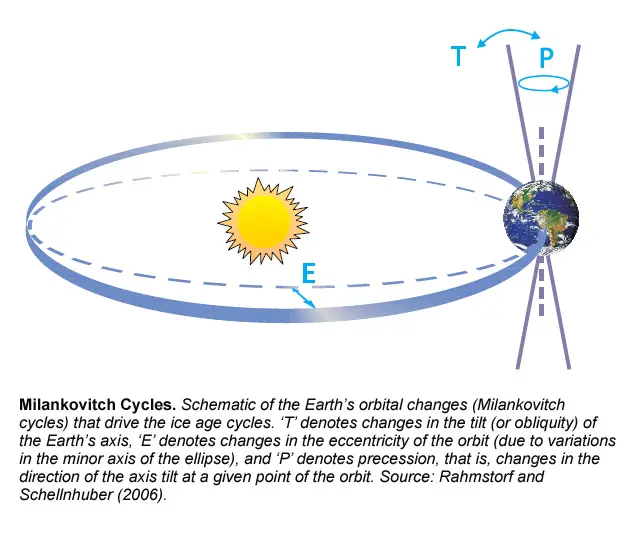
Three properties of the Earth's orbit are known to change on long timescales, from 26,000 to about 100,000 years. These include how non-circular the orbit is (the eccentricity), how titled the rotation axis is compared to the orbital plane (the obliquity), and the direction of that tilt at a given point in the orbit (precession). The effect of these variations on the length of the seasons and the amount of sunlight received by the Earth throughout the year was worked out in the 1930's by a Serbian mathematician. Comparing the predictions of this natural variation in solar energy received by the Earth with the reconstructed surface temperature over the past 250,000 years shows a clear correlation, at least until recently.

What about the Sun itself? Could variations in its energy output be responsible for recent changes in the Earth's climate? In fact, the magnetic field of the Sun flips every 11 years and during this time the total energy output changes by about 0.1 percent -- the Sun emits more energy during periods of high magnetic activity. However, the change in energy output from one magnetic cycle to the next can only account for about 10 percent of the warming over the past century, and it has actually been going down since the 1960's while the temperature of the planet has continued to rise dramatically.

Climate scientists have tried to account for global warming using only these natural contributions, but they can only match the recent increases in temperature when they also consider human activities. The most significant of these activities is the release of heat-trapping pollution like carbon dioxide and methane, but the scientists also consider the cooling effects of aerosols and modern changes in land use patterns. On balance, considering all of the natural and human-induced contributions to climate change, the conclusion is unambiguous. The planet is warming because of us.

It is human nature to prefer a reassuring lie over an inconvenient truth. We want an easy way to escape the difficult situation we have created for ourselves. In a rebuttal to Cunningham's editorial, Nobel prize winner Robert Curl put it simply. "How much does the present owe to the future? This is a hard philosophical question. Neither Cunningham nor I will live to see how this turns out, but I expect my grandchildren to. I prefer that the planet they inherit is not a world in distress."

Tuesday, July 13, 2010

Cycles in the Sun

In a classic Far Side cartoon by Gary Larson, we see a man sitting at a desk surrounded by fans, reading a newspaper. On the wall beside him is a large lever with two positions labeled "rise" and "set", and the caption reads: "Inside the Sun". Our nearest star is actually much more dynamic than it might first appear, and a short paper published this week has revealed fresh evidence of something very interesting beneath the surface.

To anyone who has ever seen the Sun through a telescope (equipped with a special filter to protect your eyes!), the most obvious features are sunspots -- small dark patches about the size of the Earth that are strongly magnetic and cooler than their surroundings. If you recorded the position of the spots every day for weeks, you would see them come and go tracing the fluid rotation of the Sun -- moving faster near the equator and more slowly towards the poles. If you kept careful records of the sunspots over decades, you would notice a regular rise and fall in the number of spots every 11 years. This is the most visible manifestation of an underlying magnetic cycle in the Sun, where the magnetic bubbles that appear as sunspots are periodically stretched out, reorganized and recycled by the rotation and other motions deeper in the interior.

Although we cannot see spots on other stars directly, long-term studies of stars like the Sun show similar magnetic cycles. All other things being equal, stars that rotate faster generally have shorter cycles, since they are more efficient at recycling their magnetic bubbles. However, when astronomers examine in detail the relationship between rotation and the length of the magnetic cycle, there seem to be two different types of stars -- "active" stars that spin faster than the Sun and have magnetic cycles every 400 rotations, and "inactive" stars that spin more slowly and exhibit magnetic cycles every 90 rotations. Some of the "active" stars show both types of magnetic cycles simultaneously, suggesting that the two types of cycles might actually just be operating in different regions of the star.

The paper published this week by a team of mostly British astronomers used an innovative tool to study the magnetic cycle of the Sun -- they peered beneath the surface with the help of sound waves that bounce around inside and set up standing waves with specific frequencies, a technique known as helio-seismology. As the Sun moves through its magnetic cycle, the frequencies of these standing waves change slightly. Looking at the changes in these frequencies over 25 years the team noticed not only the expected 11-year variation, but also a regular 2-year variation that appeared to be operating independently. Although the Sun itself seems to be peculiar, other stars that show an "active" magnetic cycle every 11 years also show a secondary "inactive" magnetic cycle -- every 2 years. This is the most direct evidence to date that the Sun might actually have two different magnetic cycles operating simultaneously on the inside.

Although the Sun does not seem to be a typical star, astronomers can study it in much more detail to understand how stars work in general. As this new observation suggests, it is equally important to study a variety of other stars to identify what is peculiar --- and what is normal -- about our nearest star.

Friday, June 11, 2010

Exoplanet in Action

Yesterday the European Southern Observatory issued a press release containing an incredible image of an alien planet moving from one side of its host star to the other in just 6 years. The star, known as beta Pictoris, has been studied for several decades after the early discovery that it was surrounded by a debris disk. With new technologies that now enable high-resolution imaging from large ground-based telescopes, we can actually watch an exoplanet as it moves around in orbit.

In 1983, beta Pictoris was one of four hot stars (including also Vega, Fomalhaut, and epsilon Eridani) that were discovered to be surrounded by disks of gas and dust using the IRAS satellite. The classic image of beta Pictoris at the center of a cross-hair with the debris disk shooting out diagonally in 1980's graphics instantly became an icon -- symbolic of the quest for extra-terrestrial life. If we could see an alien solar system being formed before our eyes, then the chances seemed good that we are not alone in the Universe. It was just 18 months ago that NASA released the first direct image of an exoplanet from the Hubble Space Telescope, in orbit around one of the other IRAS stars, Fomalhaut. But in that case the orbit of the planet was 10 times the size of Saturn's orbit around the Sun -- so the planet only moved a tiny fraction of its orbit in the two years between the sets of observations. The planet around beta Pictoris is much closer to its star, at a distance between the orbits of Saturn and Uranus in our solar system.

Soon after the Hubble announcement in 2008, a team of French scientists released their first image of a faint object close to the star beta Pictoris, from observations made at the Very Large Telescope in 2003. The telescope has a computer-controlled mirror that can actively deform itself to compensate for the distortions caused by turbulence in the Earth's atmosphere. Using this technology, the scientists were able to cleanly separate the image of the faint object from the image of the bright star, just one ten-thousandth of a degree apart in the sky (roughly the size of a mosquito viewed from a mile away). The trouble was, they couldn't rule out the possibility that the faint object was a distant background star -- so they had to wait several years to see if the object would move. In late 2009 they obtained a second high-resolution image, and sure enough the faint object had moved to the other side of beta Pictoris. It was a true planet, about 9 times as big as Jupiter.

The astronomers estimate that they should be able to see the planet go all the way around beta Pictoris in less than 20 years. By then this type of observation should be routine, and it would be surprising if we weren't monitoring the movements of hundreds of such exoplanets.

Friday, May 28, 2010

The Ages of Stars

Astronomers have used many tricks to try and measure the ages of stars, but most methods are not very precise. A star like the Sun has a lifetime of around 10 billion years, so knowing the age to within a few billion years is about the best we can expect from conventional techniques. Using new observations from the Kepler space telescope, this week I finished a project that measured the age of a star to within just 50 million years, a precision that has only been achieved for one other star: the Sun.

We can set a lower limit on the age of the Sun just by measuring the age of the Earth. This is usually established by finding rocks containing elements (like Uranium) that radioactively decay, and determining what fraction of the material has been converted into the stable byproducts. The oldest rocks on the Earth are found to have an age around 4.4 billion years, while similar methods applied to meteorites give an age just over 4.5 billion years. This is a good first guess for the age of the Sun, but there are also more direct methods. As a star gets older, it converts hydrogen into helium and energy through nuclear fusion -- this is what makes a star shine. Sound waves generated by the boiling motions of the hot gas near the surface travel through the center of the Sun and reveal the composition deep inside. This technique, known as helio-seismology, implies an age for the Sun of 4.68 billion years.

The Kepler space telescope is observing thousands of other stars like the Sun, and we can also use seismic techniques to measure their ages. For a typical star, astero-seismology can determine the age to within about 1 billion years. However, during certain phases of a star's life we can see an interaction between the sound waves generated at the surface and buoyancy waves (similar to the waves in the ocean) that are trapped deep inside. Essentially the two types of waves couple to one another briefly and influence the tiny changes in brightness that we can measure at the surface. The net effect is like a very precise clock -- by measuring the frequency of the brightness variations, we can tell the age of the star to better than 100 million years. To make such measurements, we rely on computer models of the star -- so any imperfections in our models carry over into uncertainties about the absolute age. It's as if we have a watch that keeps very good time, but we still don't know whether it is set to the correct time zone.

It is difficult to measure the ages of individual stars, since the visible changes throughout their lifetimes are fairly subtle. Whatever the limitations of seismology for determining the absolute ages of stars, this technique can certainly place stars into a precise chronological sequence. By applying the method to many other stars like the Sun we can get a better understanding of what our own star was like in the past, and how it will be in the future.