Tuesday, October 27, 2009

NASA at the Crossroads

When I was in college, many of my astronomy classmates joined a group called "Students for the Exploration and Development of Space". Although I strongly support exploration, I didn't join the group because I felt uneasy about the "development" of space -- to some people this means glowing billboards in low-earth orbit, or inflatable space hotels for wealthy clients. In an era of dwindling support for the space program, NASA is wrestling with similar questions about the future.

This week NASA is scheduled to launch the new Ares I-X, an experimental version of the rocket that is supposed to replace the space shuttle. Unfortunately the Ares is unlikely to be ready by the time the space shuttles are retired at the end of 2010, leaving at least a 5-year gap in the ability of NASA to send astronauts to the International Space Station (ISS). NASA is hesitant to extend the life of the shuttle program, since the accidents in 1986 and 2003 raised fundamental questions about safety. The other immediate option is to hitch a ride to the ISS with the Russians for a few years until the Ares rocket is finished. But a committee appointed by the Obama administration earlier this year would like to see a different solution. Led by a former aerospace executive, the panel concluded that NASA should turn over the business of putting astronauts in orbit to private companies.

The notion of a "public-private" partnership for space exploration involves large public subsidies to aerospace companies, who will then take over the business when it is mature and collect the profits. Of course the risks would continue to be insured by the government, not the private sector. Former NASA administrator Michael Griffin is skeptical about the safety of commercial space travel, commenting that the plan "will work right up until there is the first accident." But Elon Musk, founder of the private launch company SpaceX, disagrees. "It's incredibly bad business to kill your customers", he said. There are other private launch companies with a longer track record, but none have any experience putting people into orbit. So the problem remains.

Perhaps the most sensible thing for NASA to do is once again rethink its long-term objectives. The "Vision for Space Exploration" set forth by the Bush administration will only funnel more money to aerospace companies -- fueling the "development" of space at the expense of "exploration" that would provide real scientific advancement.

Tuesday, September 15, 2009

Personalizing Climate Impacts

A report released today by the World Bank includes a simple observation about the failure of humanity to act against the dangers of a warming planet. "The slow pace of climate change as well as the delayed, intangible and statistical natures of its risks simply do not move us." Scientists must strike a careful balance between communicating the seriousness of the problems we face, without using scare tactics. How can we bring the future impacts home to the citizens of the world?

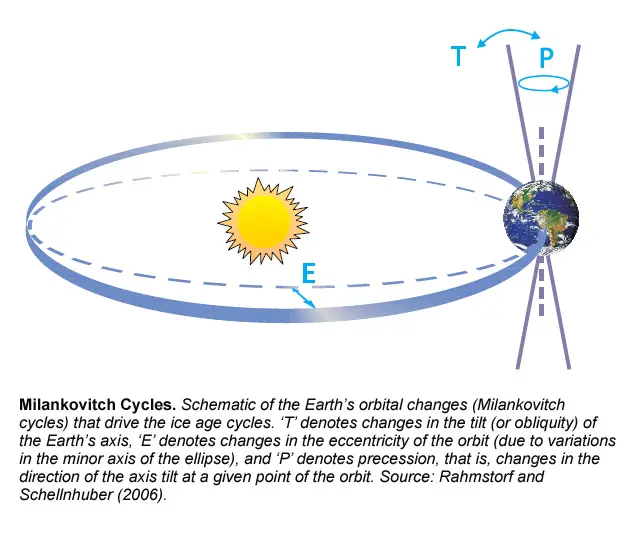
A few weeks ago I had a conversation with a young woman at the birthday party of a mutual friend. When she learned that I work at the National Center for Atmospheric Research, she asked, "is climate change real, or is it just a scam to get more funding from the government?" I was floored. I explained that when our parents were our age there was still some uncertainty about the exact causes of global warming. There have always been natural changes in climate caused by a slight wobble in the Earth's orbit around the Sun, leading to ice ages and warm periods that alternate over tens of thousands of years. During the past century the changes have been much faster than ever before, and less than a quarter of the recent warming can be explained by natural cycles. The rest is from heat-trapping gases released by human activities. Whatever we do now, the globe will continue to warm for the next several decades as the Earth slowly absorbs the excesses of earlier generations. We can't blame them, because they didn't know what they were doing. But now we know, and our actions will determine the kind of world our children will live in. I told her that the necessary changes wouldn't be as dramatic as everyone imagines. If we all adopt a lifestyle more like our parents in the 1960's, with smaller houses and one car per family, it would go a long way toward solving the problem. At the same time it will improve our real quality of life, allowing us to spend less time working and commuting with more time for the things that truly matter.

The evidence for climate change is all around us. Here in Colorado, recent warming has expanded the population of parasitic pine beetles that have decimated our national forests. One campground in Rocky Mountain National Park now resembles a clear-cut logging operation, with all of the "beetle kill" removed for the safety of visitors and the surrounding trees that are still healthy. As dramatic as it seems, the connection to climate change is not obvious to the casual observer. The park staff do not distribute pamphlets that explain the cause of the beetle problem, and there are no signs to proclaim "global warming in action". But the Nature Conservancy recently announced a website that tries to convey the impacts of climate change on a local level. Their Climate Wizard is a science-based website that allows anyone to select their state or country and see the temperature and precipitation projections over the next 50 to 100 years from the most recent report of the UN Intergovernmental Panel on Climate Change. Users can zoom in on their state and then switch between alternate futures with high, medium or low heat-trapping emissions. The default is to view the temperature changes over the next 100 years across the U.S., since the next 50 years are dominated by the emissions of the past. The main lesson is that the future is typically hotter and drier, but some regions are bigger losers than others -- like the area of the U.S. where most of the food is produced.

Although it's hard to get people motivated to make lifestyle changes now that will affect the temperature of the world inhabited by their children and grandchildren, it's helpful to frame it as a moral issue. Many citizens are concerned about passing trillions of dollars in national debt to the future, and climate change is really just another kind of debt. Somebody will eventually have to pay. The sooner we address the problem, the smaller the burden will be for future generations.

Friday, August 21, 2009

Waiting for Colbert

This week I finally succeeded at getting some media attention for a fundraising project that I have volunteered for during the past two years. The basic idea is to take the 100,000 stars that NASA's Kepler satellite will search for planets, and allow anyone to adopt one of them for a $10 donation. Donors receive a certificate of adoption by email, and updates when any planets are discovered around the star they adopted. Unlike the many "name a star" scams on the Internet, no two people can select the same star and all of the proceeds go to support scientific research on the target stars. The program hasn't been without its challenges, and the exposure this week has certainly pushed it forward -- but to meet our fundraising goal, we need a Colbert bump.

After all of the news about the first science results from Kepler two weeks ago, I decided to try and ride the tail of the wave of coverage by issuing my own press release. I had tried press releases before without success, but this time it sparked the interest of reporters at both Space.com and New Scientist. From there, the story was picked up and translated for articles in Russia, China, and Brazil. By the end of the week the coverage had driven more than 4000 visitors to our website, and inspired star adoptions by more than 250 new donors. It generated as much funding in a few days as the website normally attracts in 5 months! But we are still far from attracting the millions of visitors that we need to adopt thousands of stars.

Along the road, there have been additional challenges aside from the difficulty of getting our message heard. Last summer, after the first successful fundraising from a short post to slashdot, NASA became aware of the program. They expressed some concern that donors might mistakenly believe the project was sponsored by NASA, or maybe they would think that the donor name would be officially assigned to the Kepler target stars. To appease NASA, we added a disclaimer at the bottom of every page. After the news coverage this week we were contacted by the estate of Carl Sagan, who believed that calling our adopt-a-star program the "Pale Blue Dot" project constituted unauthorized use of their copyright from his 1994 book. They were concerned that the name might lead donors to assume some kind of endorsement by Carl Sagan. Whatever the legal status of their copyright, our non-profit educational use of the phrase clearly falls within the "fair use" exception -- but to alleviate their concerns we added "the estate of Carl Sagan" to our disclaimer. Who knew there could be such a disconnect between the good intentions of scientists and the nervous deliberations of managers and lawyers?

The biggest lesson of the week is that we will need exposure to a much larger audience than we can possibly reach on the web or in print. We need television, and who would be better than Comedy Central host Stephen Colbert? He loves outer space, and his character is obsessed with having things named after him. Although our program doesn't actually name the stars, we did reserve the few stars with previously known planets just for such an opportunity. So we adopted a planet-hosting star for Stephen Colbert, and we even set up a special page for his fans. He's our first genuine pale blue dot! Best of all, one of our early adopters has a connection at the show, and offered to pitch the idea for us. Now we're just waiting for Colbert. Will he invite me to come on the show and present him with a Certificate of Adoption? If so, I'm certain that the "Pale Blue Dot" project will finally reach its goal.

Wednesday, July 29, 2009

Cap and Trade

Last month the U.S. House of Representatives narrowly passed the "American Clean Energy and Security" (ACES) Act, which would regulate the pollution that is responsible for global warming. The centerpiece of the bill is the establishment of a "cap and trade" system -- a market-based approach that was successfully used during the last two decades to reduce acid rain. Of course all markets have winners and losers, and how the rules are written determines which side you end up on.

The basic idea of a cap and trade system is simple. First you determine how much pollution can be allowed, and you limit or "cap" total emissions at that level. The cap is initially set slightly below current levels, and it is lowered slowly over time to the final goal. Polluting is no longer free -- every polluter must have permits to cover their emissions. Those who figure out how to reduce their emissions can sell or "trade" their permits to polluters who have more trouble meeting the new requirements. As the number of permits is reduced over time the market price goes up, creating an incentive to reduce your emissions and sell the permits for a profit. In 1990 a cap and trade system was established for sulfur, a common pollutant from coal burning that produces acid rain. Congress mandated a 50% cut in sulfur emissions over 20 years, but the cap and trade system worked so well that it only took 15 years to achieve the goal. Initial worries about the possible economic impact were revealed to be entirely wrong.

The ACES Act would establish a similar system for carbon, which arises primarily from burning fossil fuels and contributes to global warming. The bill requires carbon emissions to be 17% below 2005 levels by 2020, and 83% below 2005 levels by 2050. The long-term goal is based on a scientific assessment of what will be required to avoid the worst consequences of climate change. The short-term goal is somewhat disappointing, since emissions cuts are similar to compound interest -- the more we do early, the greater the long-term impact. The other important feature is how pollution rights are distributed -- the bill initially gives away 85% of the emission permits to energy companies and electric utilities for free! This fraction is gradually reduced to only 30% by 2030, but it still means huge potential profits for these businesses -- even though some of the revenue is required to be given to customers as rebates. The remaining permits are sold in an auction with most of the proceeds divided equally among all citizens and a small fraction reserved just for low-income families. The idea is to help offset the potential increase in energy prices.

An alternative vision for the carbon cap and trade system was outlined in the 2001 book "Who Owns the Sky?" by Peter Barnes. He believed that every American should get an equal share of the emission permits, and the energy companies should be required to buy them from us! The extra costs that the energy companies would inevitably pass on to consumers would be perfectly offset for the average customer by the extra income from selling the permits. Customers who found ways to decrease their energy consumption would end up making money -- providing a strong personal incentive for conservation and efficiency, which is one of the least expensive ways to reduce global warming emissions quickly.

This bill isn't perfect, but it's a step in the right direction. The Senate is expected to consider similar legislation sometime this fall. With luck a compromise bill can be signed into law before the international climate negotiations in Copenhagen this December.

Tuesday, June 23, 2009

Earth as an Exoplanet

Last week a group of Spanish scientists published some unique observations of the Earth's atmosphere, as it might be seen by an alien civilization looking for signs of life. The idea was to see what they could learn about our home from the type of data that may soon be available for distant Earth-like planets orbiting other stars. The results were impressive. The researchers identified several of the dominant molecules in the Earth's atmosphere -- and they could even tell that the sunsets are red, and the skies are blue.

More than 350 planets have now been discovered around other stars, with nearly 60 of them passing directly in front of their Suns from our vantage point on Earth. These "transiting" planets provide a special opportunity to study the atmospheres of alien worlds. As they pass in front of their host star, they block some of the starlight from reaching us. Just from the amount of missing light, we can determine the relative size of the planet compared to the star. So far, most of the planets we know about from such measurements are big -- like the outer planets in our solar system: Jupiter, Saturn, Uranus and Neptune. But with more precise measurements from satellites, we will soon be able to find smaller ones. During the transit a small fraction of the starlight passes through the planet's atmosphere, and we can use this light to learn about its composition and other properties.

Something similar happens during a lunar eclipse. As our Moon passes into the shadow of the Earth, the only sunlight that reaches it passes through our planet's atmosphere. By measuring the light on the Moon during an eclipse, we can see what a transit of the Earth would look like to a distant observer. The Spanish scientists measured a lunar eclipse last August, passing the moonlight through a prism to separate it into its spectrum of colors. Individual molecules in the Earth's atmosphere absorb specific colors of light, creating dark lines in the spectrum like a fingerprint that identifies the molecule. The lunar eclipse spectrum revealed signatures of oxygen, water vapor, carbon dioxide and methane -- as well as traces of many other molecules. But the most dramatic feature of the spectrum was immediately obvious -- nearly all of the blue light was missing.

As sunlight passes through the Earth's atmosphere, some of the light that isn't absorbed by the individual molecules is scattered by them instead. The typical size of air molecules makes this process, known as "Rayleigh scattering", much more effective for blue light than it is for red light. As a consequence mostly the red light makes it through the atmosphere to the Moon during a lunar eclipse, while the blue light is scattered and makes the sky appear blue. This is also why sunsets look red, since the sunlight passes through much more atmosphere when it is near the horizon than when it is high in the sky.

The most amazing thing about these new observations is that nobody had ever thought to look at the Earth in this way before. In the near future, after NASA has discovered transiting Earth-like planets around other stars, satellites such as the James Webb Space Telescope will be able to obtain spectra if their atmospheres. And now we know what it might see... blue skies.

Wednesday, May 20, 2009

Lifeline for Hubble

A long drama finally came to a close this week, as the crew of the space shuttle Atlantis released the Hubble Space Telescope back into orbit after 8 days of grueling repairs. Headlines have understandably been dominated by the overwhelming success of the servicing mission -- but behind the scenes there was another story, with a more human dimension, that most people never knew about.

After the tragic loss of the space shuttle Columbia and its crew in February 2003, everything in orbit that relied on the shuttle program came to a grinding halt. The future of the final Hubble servicing mission was suddenly very uncertain. It took nearly 29 months before the shuttle returned to the skies in July 2005, and another year before it continued regular operations in July 2006. During these three and a half years, the primary concern was whether NASA could ensure the safety of shuttle crews -- so in August 2004, administrator Sean O'Keefe commissioned a study to determine the viability of a robotic servicing mission to Hubble. This idea was ultimately rejected in April 2005 by the next administrator, Michael Griffin, who finally approved the servicing mission in October 2006. In the meantime, Hubble was gradually losing many of its scientific functions.

Throughout this period, the life of Hubble was extended again and again by the heroic efforts of the scientists and operators at the Space Telescope Science Institute in Baltimore. Every time a component of Hubble failed, these men and women figured out a way to continue limited science operations on whatever was left. For many, their jobs literally depended on it -- without Hubble they would have nothing to do until the launch of the James Webb Space Telescope in June 2013 (at the earliest). So they were determined to keep Hubble working, and they did. The servicing mission was finally scheduled for October 2008, but Hubble's on-board computer system failed just two weeks before launch. It took weeks for engineers to design a short-term fix, and months for astronauts to incorporate the replacement computer into their long-rehearsed training routine.

Which brings us to this week -- when all of that training was finally put to good use, and the long-anticipated repair mission has come to a successful conclusion. The main digital camera on Hubble was replaced with a newer model, and the old corrective lenses it received in 1993 to fix its fuzzy vision were replaced by a new light-splitting spectrograph that will peer to the very edge of the observable universe. Two of the other scientific instruments, STIS and ACS which have been dead or crippled since power supply failures in 2004 and 2007, have now been restored. These science upgrades were complemented by a host of routine repairs including: the installation of new gyroscopes for the telescope's pointing system, new batteries which are charged by Hubble's solar panels for 60 minutes of each orbit and supply all of the power during the remaining 36 minutes on the dark side of the Earth, and a new insulating outer blanket that helps protect the satellite from harmful radiation and space junk. With the installation of a replacement on-board computer system and an external dock to support the future robotic capture of the telescope for disposal at the end of its life, the servicing mission was complete.

Hubble is now expected to continue its marathon of ground-breaking discoveries well into the next decade -- and most importantly, until the next space telescope is operational. The dozens of people at the Space Telescope Science Institute whose jobs depend on this mission can now breath a collective sigh of relief.

Thursday, April 16, 2009

Colbert Station

This week, the name of the next module to be added to the International Space Station was announced by NASA on Comedy Central's show "The Colbert Report". While it may seem an odd venue for such an announcement, NASA's online poll to name the new module had an unambiguous winner: "Colbert". The question on everyone's mind: would NASA honor the results of the web vote?

The poll was initiated by NASA earlier in the year, and the voting ended on March 20. In addition to four suggested options -- "Serenity", "Legacy", "Earthrise" and "Venture" -- NASA also allowed write-in votes. When space enthusiast and host of a popular Comedy Central show Stephen Colbert learned of this opportunity, he encouraged his viewers to write-in "Colbert" to help him win the contest. They responded in droves. Nearly 1.2 million votes were cast, and "Colbert" topped the list. "Serenity" was the most popular of NASA's options, but the voting was dominated by write-ins.

On Tuesday, astronaut Sunita Williams appeared on "The Colbert Report" to announce NASA's final decision for the name of the new station module. And the winner is: "Tranquility"? Since this year marks the 40th anniversary of the Apollo 11 mission that landed the first humans on the Moon, NASA selected one of the other suggestions among the top 10 write-in votes -- a reference to the Apollo 11 landing site, in the Sea of Tranquility. The contest rules were clear that NASA reserved the right to make the final decision, regardless of the outcome of the online poll. But one can imagine that many Colbert fans were disappointed.

As a compromise, NASA decided to honor the Comedy Central host in a slightly different way. Among the contents of the new station module will be a sophisticated zero-gravity exercise device that will now be known as the "Combined Operational Load Bearing External Resistance Treadmill," or COLBERT. They even designed a "mission patch" for the unit, and offered to let Colbert try it out for himself at one of NASA's facilities in Houston. His response on the show was classic Colbert: "I think a treadmill is better than a node … because the node is just a box for the treadmill. Nobody says, 'Hey, my mom bought me a Nike box.' They want the shoes that are inside."

It was a boost of publicity for the International Space Station that NASA would never have enjoyed without the help of Colbert. Now, if I could just get him to lend the "Colbert bump" to my project...